The October newsletter from the Steiner Ranch Master Association asks homeowners to "cast your vote by October 23rd" in the SRMA Limewash Survey. The survey covers two older finishes for brick and stone, German schmear and limewash. In the same section, the newsletter says painting brick and stone "will remain prohibited in Steiner Ranch." So the HOA is considering two finishes while leaving a third banned, and it explains the difference almost entirely in terms of water. Water explains the 2023 paint ban too. The manufacturers' own instructions add a few rain-related details that the newsletter summary doesn't include.
The Rule That Stays, and the Reason Given for It
The ban on painting masonry predates this survey. In October 2023 the Architectural Control Committee posted its "Top 5 Reasons your Architectural Application will be denied," and painting was first on the list. The page said the committee "will NOT approve painting brick or stone." It gave two reasons. Paint doesn't hold to rough, uneven surfaces and eventually flakes. Flaked paint "is easily carried into the greenbelt with heavy rains." The committee added that "due to our environmentally sensitive area, we strictly prohibit anything that can harm wildlife if it washes down into the greenbelt."
The October 2026 newsletter adds a second reason that comes from the wall itself. Brick and stone are "water permeable," it says, and "should not be painted or sealed because trapped water can destroy the material and create trapped mold issues." It groups whitewashing, sealing and painting together as finishes that don't let water pass through, can destabilize brick when moisture is trapped behind them, need frequent reapplication, and are "impossible to remove without harsh chemicals."
So the test has two parts. A finish has to let the wall release moisture, and it can't shed material into the greenbelt when a storm hits. The survey asks whether German schmear and limewash pass.
How the Newsletter Sorts the Three Finishes
Here are the newsletter's own descriptions side by side:
| Finish | Lets masonry breathe? | Upkeep the newsletter describes | Status in Steiner Ranch |
|---|---|---|---|
| Paint, whitewash, sealer | No | Short lifespan, frequent reapplication, removal needs harsh chemicals | Painting brick and stone stays prohibited |
| German schmear / mortar wash | Yes | "One and done," no extra maintenance | Included in the survey |
| Limewash | Yes | Touch-ups generally every 2 years | Included in the survey |
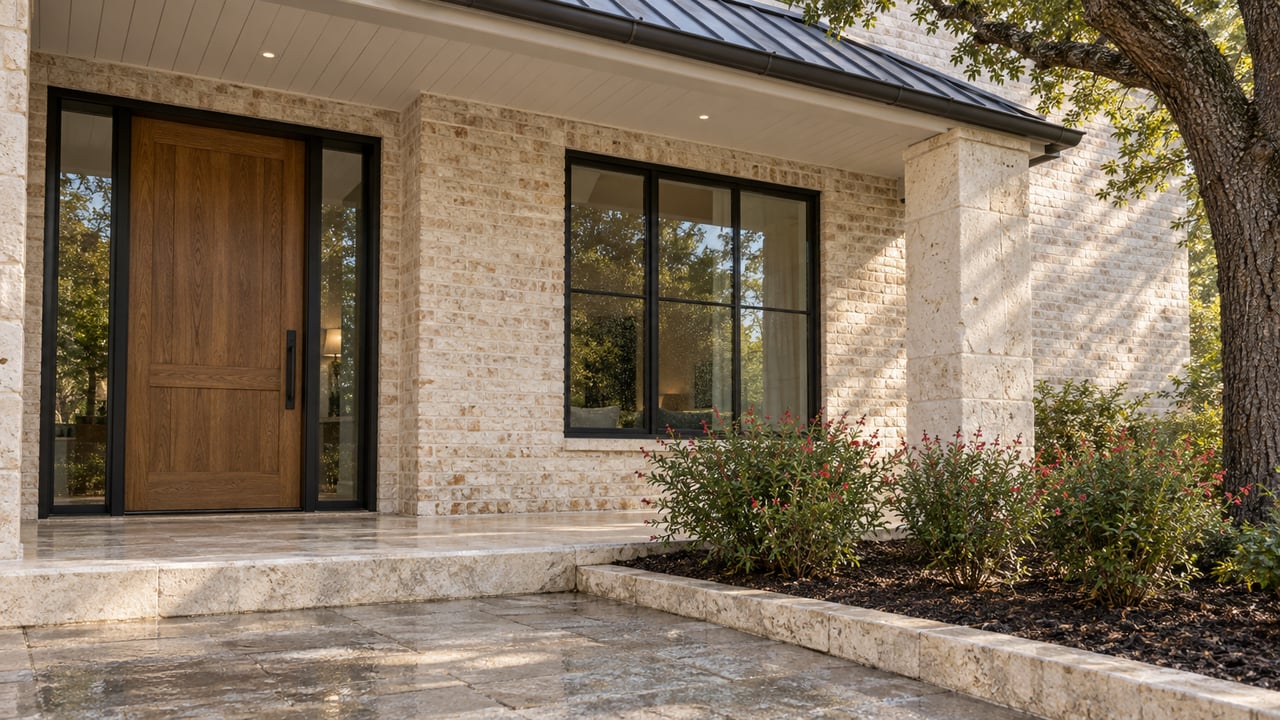
The newsletter describes German schmear as essentially "smearing mortar over your brick or stone," a technique once used to stabilize bricks on historic buildings. It can be tinted and still breathes. Limewash means rubbing thin layers of crushed limestone into the surface, applied heavily or lightly, and it "ages with time." The newsletter also names products, saying "all sources point to Romabio lime products," including Classico Limewash, Lime Slurry, Masonry Flat, Masonry Textured and Venetian Glaze, along with Color Atelier's exterior limewash and lime slurry.
By the newsletter's account, both finishes in the survey pass the moisture part of the test. The manufacturers' documents fill in more of the runoff part.
What the Product Sheets Add
The Romabio and Color Atelier documents get specific about substrate, timing and weather. Several of those details bear on the HOA's two concerns.
- Bare masonry only, at least for Romabio. The Classico Limewash technical data sheet calls for direct application on "unpainted, unsealed & absorbent" brick and stone. Reclaimed or glazed brick, concrete block and stucco need at least one coat of Romabio's MicroGrip primer first. A home with previously sealed or painted masonry starts from a different place than one with untouched brick.
- A two-day removal window. Romabio says Classico can be wiped or washed off right after application, and the whole application "can be removed up to 2 days later" with a high-force pressure washer. After that, the manufacturer doesn't promise it can be taken off.
- Rain during curing matters. Romabio warns against severe storms or showers during the 12- to 24-hour exterior drying period, and says full carbonation takes up to 20 to 25 days in ideal conditions. Color Atelier recommends at least 72 hours without rain for exterior curing.
- The concentrated product is caustic. Romabio's application guide says its paint "will not harm lawns, plants or trees once diluted," and warns that the concentrated paint has a high pH. That reassurance comes from the manufacturer and applies to the diluted product.
- Touch-up intervals vary by source. The newsletter says limewash generally needs a touch-up every two years. Romabio says Classico is made to patina as it weathers and that touch-ups can be done "at any time," with no set schedule. Color Atelier says its exterior Lime Paint fades and patinas but "will not chip or peel," and doesn't list a maintenance interval.
- Sealer is optional, and Romabio doesn't call for one on walls. Romabio doesn't prescribe a general sealer for vertical masonry. It recommends its Mineral Shield for horizontal or frequently wet surfaces, and its FAQ says Mineral Shield "is not a sealer." Color Atelier calls exterior sealer optional depending on the surface. The newsletter puts sealing in the same group as paint, as a finish that traps water.
Two things in that list connect directly to the 2023 rule. "Will not chip or peel" speaks to the flaking concern behind the paint ban. The high-pH warning and the rain-free curing windows speak to the greenbelt concern. Both apply during the first few days after a wall is coated, which is also the only time Romabio says the finish can be removed.
The Greenbelt in Question
The 2023 ACC page refers to "the greenbelt," and the land has a formal designation. Travis County's land management plan for the Balcones Canyonlands Preserve describes an 819-acre Steiner Ranch Preserve. It was accepted under a conservation easement in January 2001 and is managed by the County as part of the BCP, and the plan says the easement limits the land to preserve uses permanently. The same plan places the preserve north of Lake Austin and south of RM 620, next to the City of Austin's 1,752-acre Cortaña Tract. Its southern J-Canyon section has roughly 2,100 feet of Lake Austin frontage.
The County plan also says the development next to the preserve is subject to Protective Covenants enforced by the SRMA. That plan dates to August 2007, and it doesn't reproduce the covenants' detailed terms, so it doesn't settle any question about a specific finish. It does help explain why runoff language shows up on an architectural approval page. The HOA's own trail rules note that the community's nature trails pass through the Balcones Canyonlands Preserve, and they prohibit dumping and disturbing native landscapes there.
Lime products are also mineral-based and alkaline. Under the HOA's test, the question for each finish is how it behaves when water runs over it, whether that's moisture leaving the wall or rain heading downhill. The newsletter answers the first part. The product sheets suggest the second part depends mostly on how the job is done and the weather that week.
The Guidelines Behind the Survey
The survey is part of a larger revision. The Residential Design Guideline Manual linked from the SRMA's Community Guidelines page has a cover date of January 1, 2010, and section 6.1 covers façade design. In June 2026, the board's message listed "revisions to the ACC Guidelines" as one of several major initiatives, along with the boat dock redesign and approval of a comprehensive reserve study. The public material doesn't include the survey's exact wording or answer choices, and no meeting record on the topic has been posted yet. Any change will come through that revision process.
Neighborhood documents still apply on top of the master rules. The 2023 ACC page says that the items in neighborhood-specific documents "super-cede the guidelines." A master-level decision on limewash may not cover every lot the same way.
The October Dates
Here are the October 2026 dates from the HOA's calendar:
- October 12, 5:30 p.m. SRMA board work session, Towne Square Conference Room.
- October 21, 6:30 to 8:30 p.m. SRMA monthly board meeting at Towne Square Community Center, open in person, with a Zoom link for those who can't attend.
- October 23. Deadline for the SRMA Limewash Survey.
The survey stays open two days after the board meeting. Any limewash question raised on October 21 comes before the final responses are in.
Even with an approved finish, the process stays the same. The newsletter's ACC section says all exterior changes need an ACC request and lists "exterior painting or siding changes" among the items to submit before work begins. It also advises getting written approval before starting. The committee asks for photos of the current area, a rendering or example image, and exact colors and materials with the first submission. For a lime finish, the Romabio and Color Atelier product names in the newsletter are the natural place to start that list.
Timing also depends on the season. Romabio's application range for Classico is 50 to 88°F for both air and surface, with relative humidity under 80 percent, and surfaces hotter than 80°F should be dampened first. Color Atelier's sheet says not to apply below 41°F or above 93°F. If the survey leads to approval, the timing of the approval letter, those temperature ranges and the rain-free curing period will together decide when the work can actually be done.
At Thompson Real Estate Group, we pay attention to how exterior rules like this one affect a home's presentation and upkeep over time. If you're weighing a masonry finish and want to talk through how it fits your home's long-term plans, we invite you to Initiate a Private Consultation.
This article is general information, not legal, tax or financial advice. Consult a qualified professional about your situation.